PUBLIC WORKS
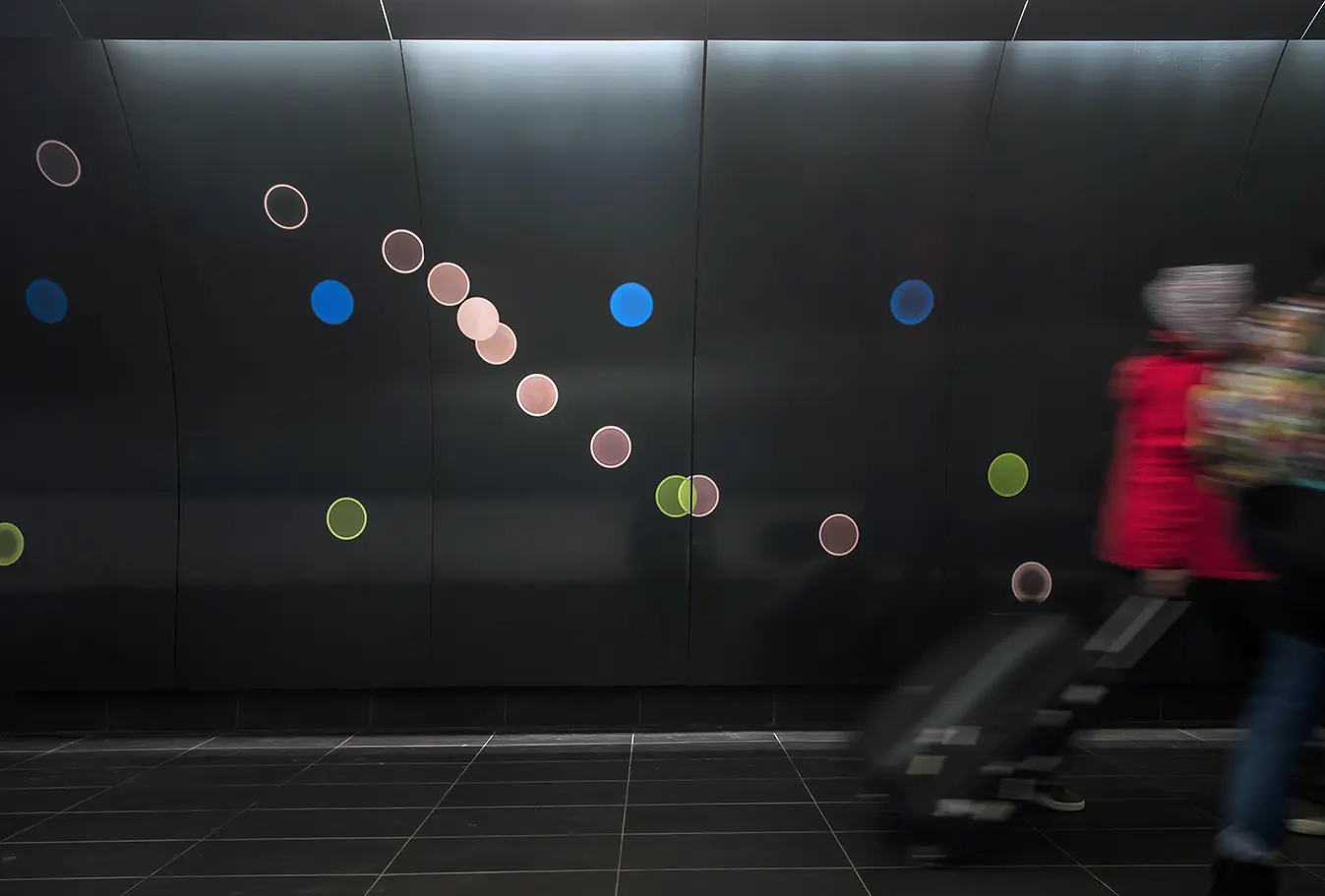
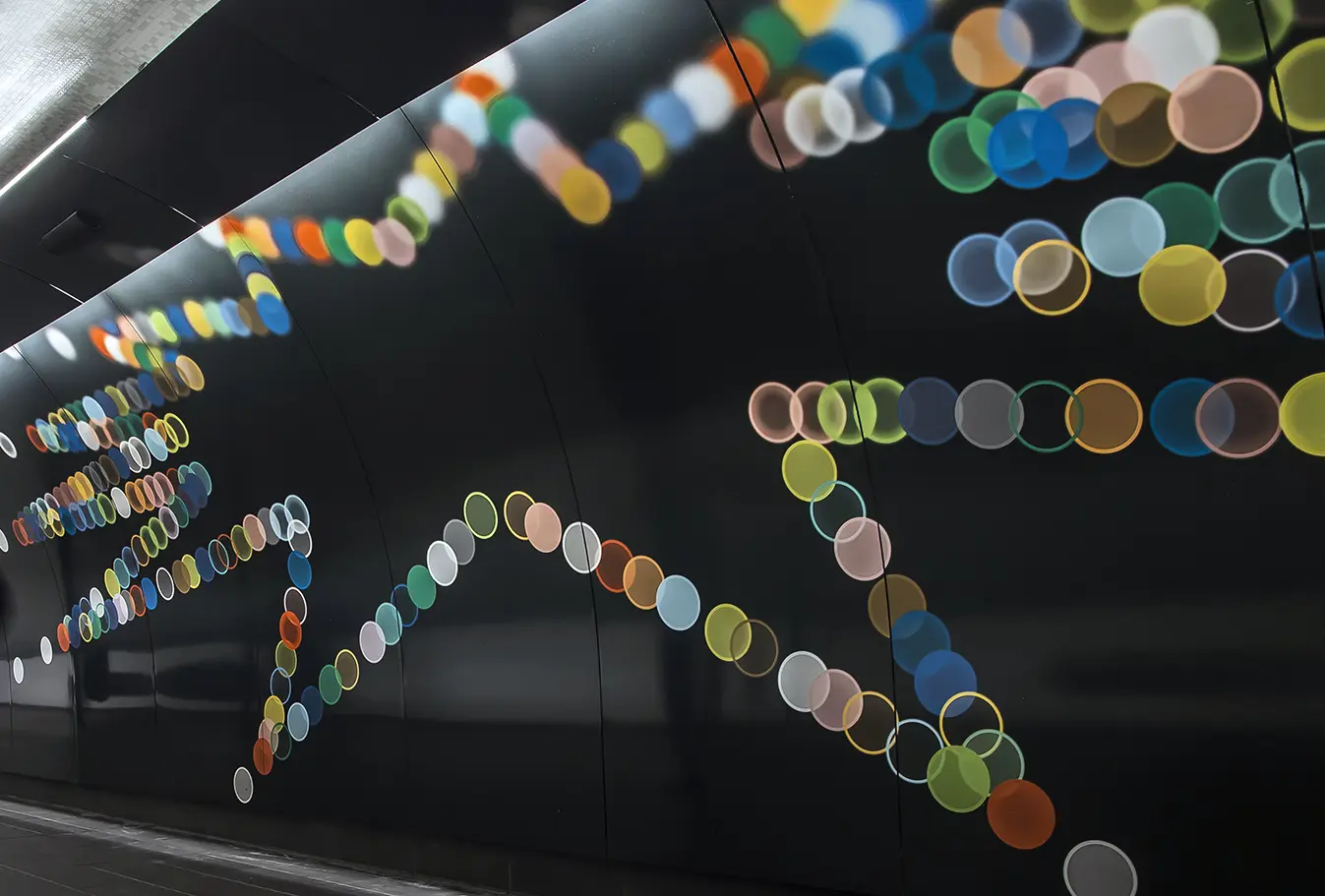
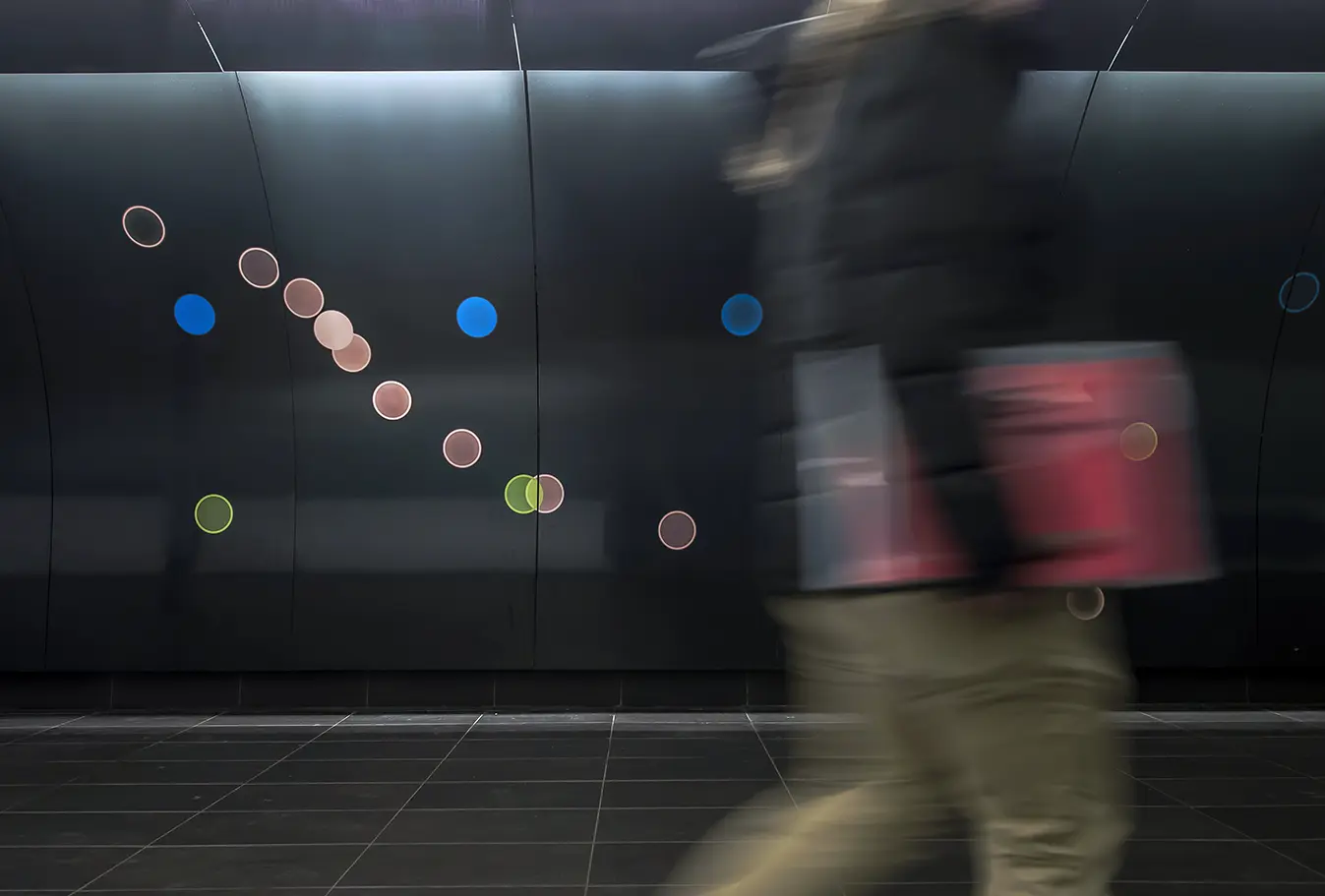
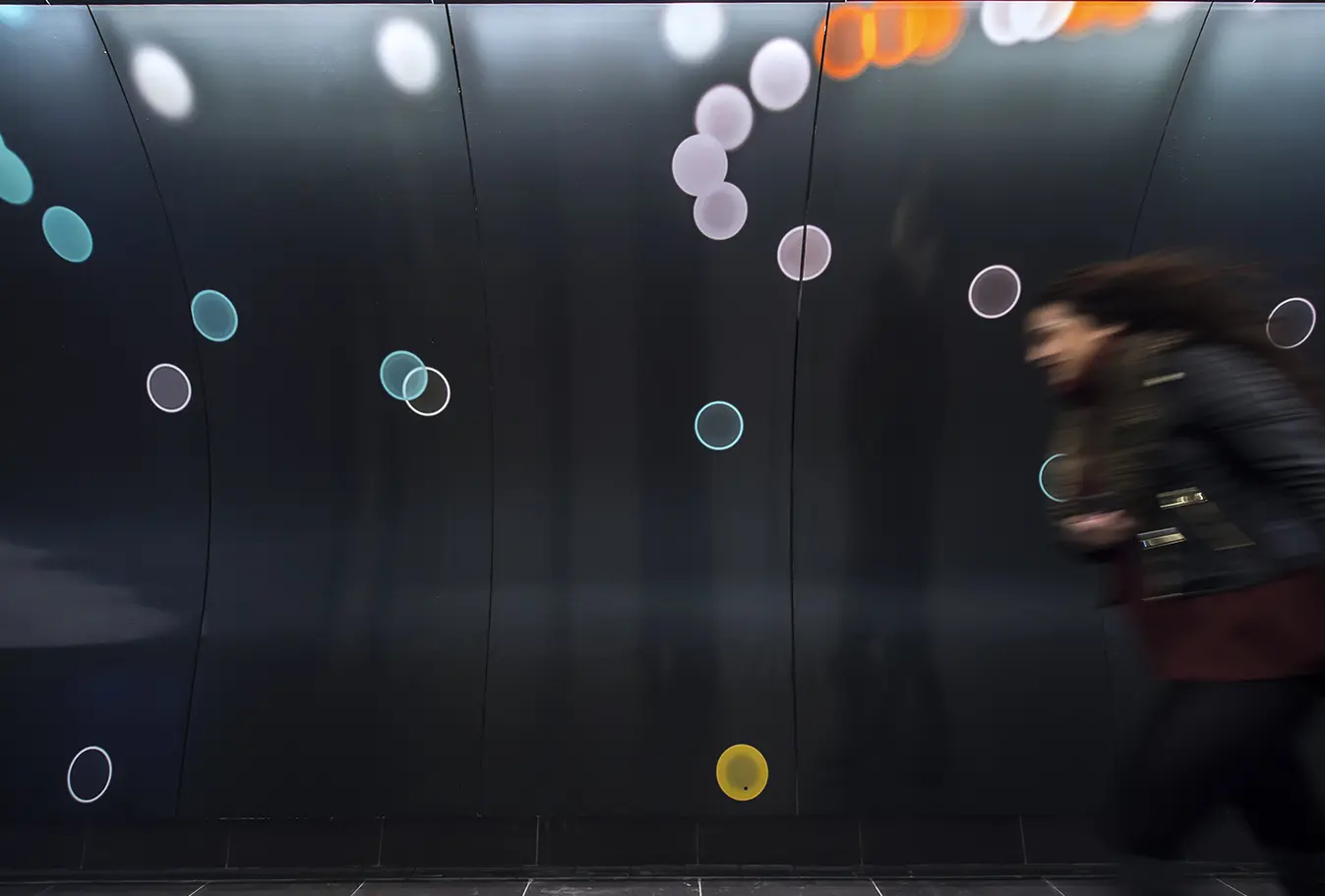
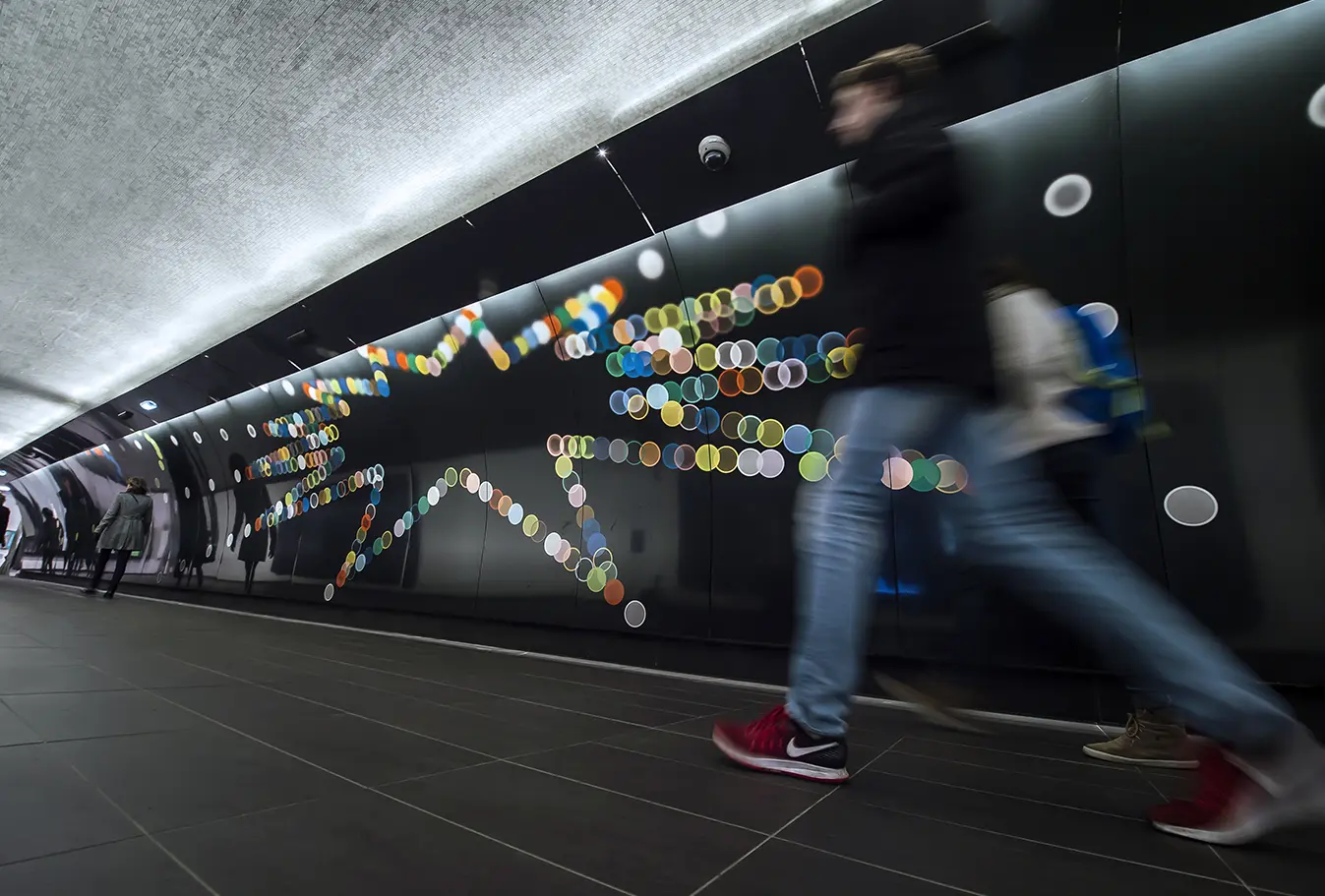
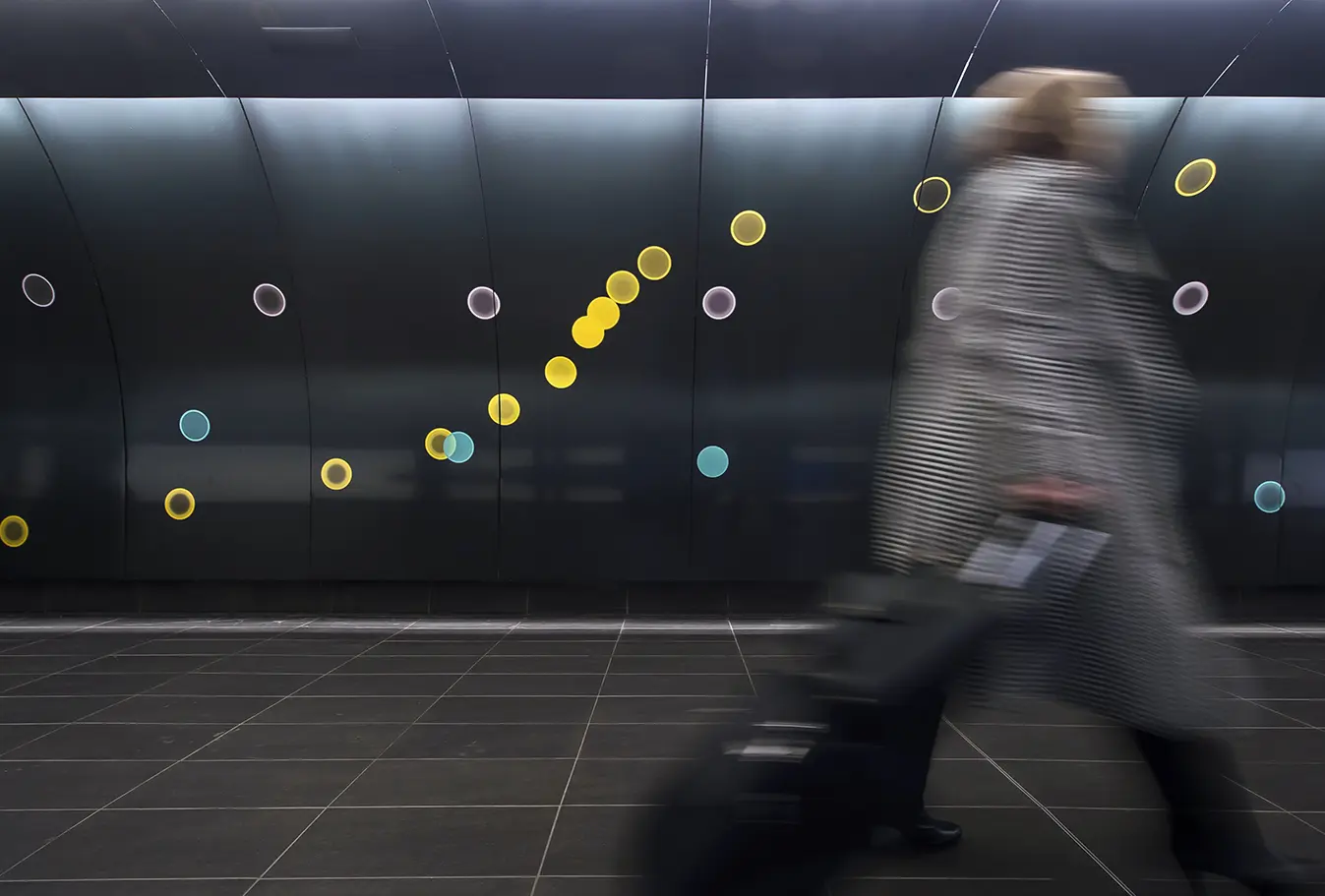
CDG Étoile Mural developed from an ongoing exploration of the dot as a fundamental unit of image-making. Originating in a print-making process based on controlled drops of coloured ink, the project investigates how simple repeated marks can generate rhythm, structure and visual complexity.
The mural adopts the exact colour references of the Paris Métro network, transforming a familiar navigational system into an abstract field of colour. Rather than representing the city, the work borrows one of its existing visual languages and reconfigures it as an immersive experience. The palette becomes a ready-made framework through which information is translated into sensation.
Conceived specifically for a transit corridor, the mural is experienced through movement rather than from a fixed viewpoint. As travellers walk alongside the composition, streams of coloured dots appear to connect, separate and reform, encouraging the eye to follow pathways through the image. The work unfolds progressively, echoing the linear logic of the transport network itself.
The optical behaviour of the dots introduces a further dimension. Their shifting density and colour relationships create sensations of blur, depth and recession, recalling distant headlights, illuminated signals or urban lights seen in motion. What begins as a highly organised graphic system gradually becomes atmospheric and spatial.
CDG Étoile Mural ultimately transforms a functional passageway into a perceptual journey. Combining the languages of graphic design, print-making and public art, it invites viewers not simply to look at an image, but to move through it, turning the experience of transit into an experience of colour, light and time.
This version feels tighter and more specific to the actual experience of the work. It also places the traveller at the centre of the project rather than treating the mural as a static composition on a wall. That seems important given the scale, location and intended mode of viewing.
“I worked on the dots. They function not as half-tones, but discs of colour that ideally would have been spray painted, but in the end were printed onto the metal.”